

Last Updated: November 28, 2026
Quick Summary
To choose the right size well pump, start with your well’s driller’s log and size against four numbers: well yield, household peak demand, total dynamic head, and pressure requirement. Match that total dynamic head figure against the pump curve, not the label, and never size a pump to pull more than the well can recharge.
- Most residential wells need 8 to 12 gallons per minute, sized around household demand, well depth and pumping level, and recovery rate.
- Total dynamic head adds vertical lift, height to the highest fixture, pressure converted to feet, and friction loss.
- Convert pressure to feet by multiplying psi by 2.31 when calculating total dynamic head.
- An oversized pump short-cycles and wears the motor and pressure switch, while an undersized pump runs nonstop.
- Measure the inside diameter of the casing to confirm the pump body, drop pipe, and cable will pass without binding.
Table of Contents
- Start With Your Well’s Records, Not the Pump Aisle
- What Size Well Pump Do I Need? Four Numbers That Decide It
- Submersible vs. Jet: Pros and Cons for Each Pump Type
- How to Use a Well Pump Size Calculator Without Getting Burned
- Reading a Well Pump Size Chart and a Submersible Well Pump Sizing Chart
- Oversized, Undersized, and Seasonal: Where Sizing Goes Wrong
- Electrical Compatibility, Installation Constraints, and What Comes After Sizing
- Book a Well Pump Sizing Visit With a Certified Installer
- Frequently Asked Questions
Start With Your Well’s Records, Not the Pump Aisle
Most homeowners start shopping for a well pump by looking at a shelf or a search result. That is backwards. The right way to choose the right size well pump starts with paper, not product: the driller’s log and pump records that came with your well. This guide walks you through a records-first process for choosing a pump. Once the well records establish the pump’s capacity, AquaShield Home Systems can help you consider how filtration fits into the water system without confusing treatment needs with pump sizing.
If you cannot find your driller’s log, call the company that drilled the well or your local health department. While you gather those records, it also helps to know how often you should test well water in Chester County. Many keep copies on file.
Reading the Well Driller’s Log
The driller’s log is a short record of what was found underground when the well was built. It lists the well’s total depth, the depth where water was first struck, the casing size, and the static water level measured at completion. Those numbers set the ceiling on what any pump can do. A pump sized without them is a guess.
Static Water Level vs. Pumping Water Level
Static water level is the water’s resting height in the well when no pump has run for a while. Pumping water level is where the water sits while the pump is running and the well is being drawn down.
The gap between the two tells you how much the well recovers under load. That gap, not the static number alone, is what you size against. A well that looks deep and generous at rest can drop fast once water starts moving.
What Size Well Pump Do I Need? Four Numbers That Decide It
You need four numbers: well yield, household peak demand, total dynamic head, and pressure requirement. Get those right and the pump size follows. Skip one and you are guessing at horsepower.
Well Yield and Recovery Rate
Yield is how many gallons per minute the well can safely produce. Recovery rate is how quickly water refills the well after drawdown. A well pump sizing guide from South Carolina Well Service notes that most residential wells need 8 to 12 gallons per minute, sized around household demand, well depth and pumping level, and recovery rate. Never size a pump to pull more than the well can recharge.
Household Water Demand and Peak Flow
Count the occupants and the fixtures that might run at once. Two showers, a dishwasher, and a washing machine at the same time is your peak demand, not your average day. Size for that peak, because that is when a small pump shows its limits.
Total Dynamic Head, Explained With a Calculation
Total dynamic head is the total work the pump must do, measured in feet of lift. Add four things:
- Vertical lift from pumping water level to the surface
- Height from the surface to the highest fixture
- Pressure converted to feet (multiply psi by 2.31)
- Friction loss in the pipe and fittings
Example: 60 ft lift + 20 ft rise + 40 psi (about 92 ft) + 10 ft friction loss = roughly 182 ft of total dynamic head. Match that figure against the pump curve, not the label.
Submersible vs. Jet: Pros and Cons for Each Pump Type
Submersible pumps sit down in the well and push water up. Jet pumps sit above ground and pull water up. The choice depends on depth and how much lift the system needs.
| Pump Type | Best For | Pros | Cons |
|---|---|---|---|
| Submersible | Deep wells, high lift | Quiet, efficient, handles deep water | Harder to service, pulled for repair |
| Shallow-well jet | Shallow water tables | Easy access, simpler service | Limited lift, noisy |
| Deep-well jet | Moderate depth | Above-ground service access | Less efficient at depth |
A common mistake is buying a jet pump for a well that is simply too deep for it. In practice, that pump runs constantly and never keeps up.
How to Use a Well Pump Size Calculator Without Getting Burned
A well pump size calculator is a useful cross-check, not an answer. It only knows the numbers you feed it. Enter a static level instead of a pumping level, or skip friction loss, and it will hand you a confident wrong answer.
Use a calculator to confirm your four numbers, then compare the result to the pump curve. If the two disagree, trust the curve and your records.
Reading a Well Pump Size Chart and a Submersible Well Pump Sizing Chart
A well pump size chart maps flow and head to horsepower. A submersible well pump sizing chart does the same for pumps designed to sit in the well. Read both as ranges, not rules.
Why the Submersible Well Pump Sizing Chart Is Not the Whole Answer
Charts assume ideal conditions. Your well has its own recovery rate, its own friction losses, and its own seasonal water level. The chart narrows the field. Your records pick the winner.
Oversized, Undersized, and Seasonal: Where Sizing Goes Wrong
An oversized pump short-cycles, starting and stopping far more than it should, which wears the motor and pressure switch. An undersized pump runs nonstop and never reaches pressure. Both shorten pump life.
Seasonal water levels matter too. A well that performs in spring can drop in a dry summer, so size with the low-water season in mind. If your pump is already cycling, what to do if your well pump keeps cycling covers the causes and fixes, and how long a well pump lasts helps you judge whether repair or replacement is the smarter call.
Electrical Compatibility, Installation Constraints, and What Comes After Sizing
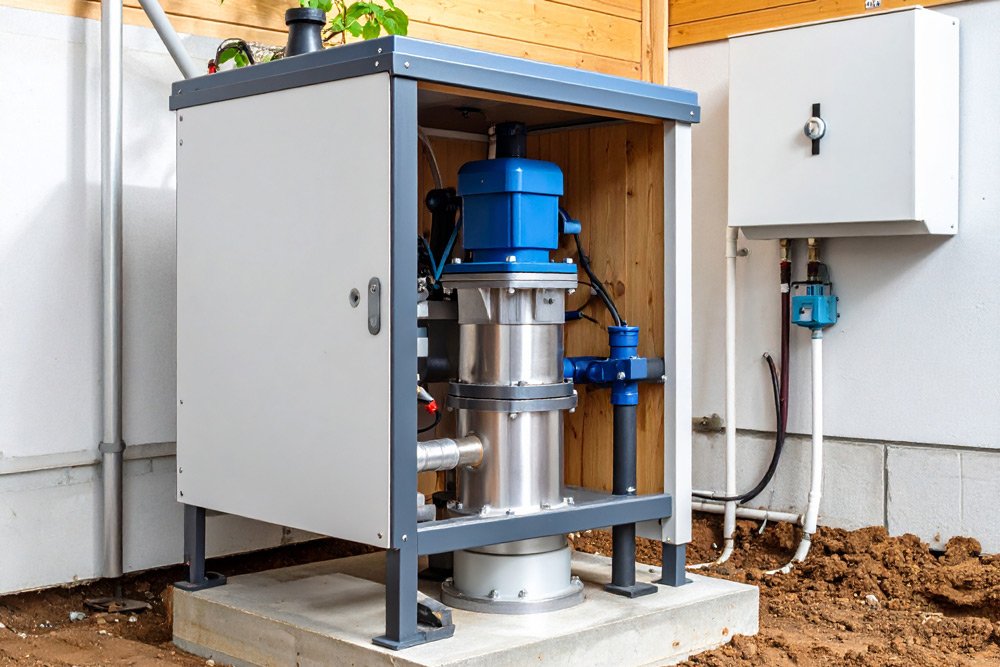
Horsepower is not the only match. A pump that fits the well hydraulically can still fail on the electrical panel, the casing diameter, or the control setup. These checks are where a paper design meets the actual well.
Voltage, Phase, and Wire Sizing
Residential submersible pumps may run on single-phase or three-phase power, so confirm the voltage your pump requires. Confirm three things before you buy:
- Available voltage at the panel, a 115-volt circuit cannot serve a 230-volt pump without a new run.
- Amperage and breaker size, the pump’s full-load amps must fit the circuit, and the breaker must be sized to the motor, not to the wire alone.
- Wire gauge over the run, voltage drop increases with distance. A long run from the panel to the wellhead may need a heavier gauge than the pump label assumes.
A pump that fits the well but not the panel is not a fit. If the existing circuit is marginal, the cost of a new run belongs in the comparison before you commit to a pump.
Casing Diameter and Pump Clearance
The well casing limits which pump body will pass. A 4-inch submersible pump needs a casing with enough inside diameter to clear the motor, the drop pipe, and the safety rope or cable. Measure the inside diameter of the casing, not the outside, and confirm the pump’s outside diameter plus the drop pipe and cable will pass without binding.
What Comes After Sizing: Protection and Settings
Sizing is not the finish line. After the pump is selected:
- **Set the pressure tank pre-charge to match your pressure switch settings.
- Match the pressure switch to the pump’s capability so it does not run past its curve or short-cycle.
- Confirm overload protection, a properly sized breaker and, where used, a control box with the correct capacitor and overload relay for the motor.
- Add dry-run protection if the well is marginal or the water level is seasonal. A pump that runs dry can burn out in minutes.
Watch out: skipping the electrical check is how a correctly sized pump ends up tripping breakers on day one, and skipping the tank pre-charge is how a good pump short-cycles itself to an early failure.
Book a Well Pump Sizing Visit With a Certified Installer
Sizing is the easy part to get wrong and the expensive part to redo. Barber Plumbing & Heating is a third-generation family business that has served Chester and Lancaster County for over 20 years, and our team is certified by the Chester County Board of Health for pump installation.
Before you book, how to choose a professional well pump installer walks you through the questions worth asking. When you are ready, our well pump installation and repair service is the place to start.
A pump that fits your well, your demand, and your panel will outlast one chosen off a chart. If you are unsure which size your well actually needs, call Barber Plumbing & Heating and let a certified installer size it right the first time. Get started with Barber Plumbing & Heating and get water pressure you can count on.
Frequently Asked Questions
Is it okay to oversize a well pump?
No. Pump sizing should account for water demand, well depth and pumping level, and recovery rate, and sizing guides explicitly caution against choosing the biggest pump available. An oversized well pump short-cycles, cycling on and off more often than the motor and pressure switch are built for, which shortens equipment life and can draw the water level down faster than the well recovers. Match pump capacity to the well’s production rate and your household’s peak demand instead of buying the largest horsepower on the shelf.
How many gallons per minute should a well pump deliver?
Most residential wells need 8 to 12 gallons per minute (GPM), according to a 2026 well pump sizing guide. That figure is a starting point, not a rule. Your actual number comes from your household water demand calculation: count occupants, fixtures, and peak-period flow, then compare that against your well yield. If the well produces less than your peak demand, a storage tank or constant-pressure system may be the better answer than a larger pump.
Is a 30/50 or 40-60 pressure switch better?
The right pressure switch setting depends on your pressure tank and what the household expects at the tap. A 40/60 switch delivers higher pressure at the fixtures but works the pump harder and requires a tank pre-charge set to match. A 30/50 setting is gentler on equipment. Whichever you pick, the pressure tank’s pre-charge and the switch settings have to be set together, and the pump curve must support the higher discharge pressure without falling off its design point.
How does well depth affect pump sizing?
Depth drives total dynamic head. The deeper the pumping water level, the more lift the pump must overcome before it pushes water into the pressure tank, and that lift adds directly to the head the pump must produce at your target flow rate. A shallow jet pump can handle a high water table in some setups, while a deep well almost always calls for a submersible pump. Always size from the pumping water level, not the depth of the hole.