

Last Updated: November 9, 2026
Quick Summary
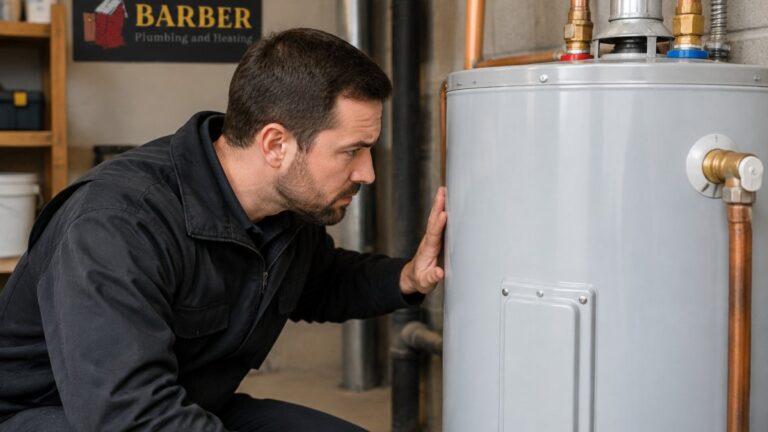
Water heater popping is usually caused by sediment. Hard water leaves calcium and magnesium behind, and that grit settles on the tank floor, trapping water that turns to steam and pops through the crust. The fix is usually a good flush, but not always.
- Sediment buildup is a common cause of popping in tank-style heaters.
- Turn off power or gas and let the water cool before draining.
- Open a hot tap upstairs to break the vacuum and let water flow.
- Refill the tank fully before restoring power or the element burns out.
- If popping continues after a flush, an inspection is the only way forward.
Table of Contents
- Why Your Water Heater Makes a Popping Noise
- How to Fix a Popping Noise in Your Water Heater
- Is a Water Heater Popping Sound Dangerous?
- Why Your Water Heater Still Pops After Flushing
- Brand New Water Heater Making a Popping Noise
- Tankless Units, Hard Water, and Anode Rods
- Book a Water Heater Inspection
- Frequently Asked Questions
Why Your Water Heater Makes a Popping Noise
If you’re wondering about water heater popping, the short answer is sediment. Hard water leaves calcium and magnesium behind, and that grit settles on the tank floor. The fix is usually a good flush, but not always.
The Sediment and Steam Bubble Mechanism
Here’s what happens. The burner or heating element sits under a layer of mineral deposits. Water trapped in that sediment turns to steam. The steam pushes up through the crust and pops. Sediment buildup is a common cause of popping in tank-style heaters.
How to Fix a Popping Noise in Your Water Heater
The fix depends on how bad the buildup is. A standard flush clears mild cases. Heavy scale, scale bonded to the heating element, or scale on the flue may need a professional. Before you start, confirm the tank is a tank-style unit and that the drain valve is not plastic and brittle; older plastic valves can snap when opened after years of disuse.
Flushing the Tank Step by Step
- Turn off power at the breaker for electric models, or set the gas valve to pilot and shut off the gas supply for gas models. Wait for the water to cool; draining a hot tank can scald.
- Shut off the cold water supply valve on top of the tank.
- Connect a garden hose to the drain valve and run it to a floor drain, utility sink, or outside. Keep the hose below the tank outlet so it drains by gravity.
- Open a hot tap upstairs to break the vacuum and let water flow.
- Open the drain valve and let the tank empty. If the water runs clear quickly, the sediment load is light; if it runs gritty or brown, you have heavier scale.
- Open the cold supply briefly to stir and rinse the sediment, then close it. Repeat until the drain water runs clear.
- Close the drain valve, remove the hose, refill the tank fully before restoring power. Running an electric element in a dry tank will burn it out.
- Restore power or relight the pilot, then open a hot tap to purge air from the lines.
Watch out: if the drain valve clogs with scale or will not close fully after the flush, stop and call a pro; forcing a stiff valve can break it and flood the area.
DIY vs. Professional: What the Decision Hinges On
A DIY flush costs little beyond a hose and an afternoon. A professional service call adds labor and may include a full inspection of the components involved. The trade-off is time and risk versus a thorough check. If the tank is over ten years old, has never been flushed, or the popping is loud and frequent, the professional route is the safer call because heavy scale can hide a failing element or a compromised tank lining. If the popping continues after a flush, or your unit is old and losing heat, it may be time to repair or replace your water heater.
Here is the flush process the article walks through, step by step.
|
Step |
What to do |
|---|---|
|
1 |
Turn off power or gas; let water cool |
|
2 |
Shut off the cold water supply valve |
|
3 |
Connect garden hose to drain valve, route to drain |
|
4 |
Open a hot tap upstairs to break the vacuum |
|
5 |
Open drain valve and empty the tank |
|
6 |
Briefly open cold supply to stir and rinse sediment |
|
7 |
Close valve, remove hose, refill before restoring power |
|
8 |
Restore power or relight pilot, purge air from lines |
Is a Water Heater Popping Sound Dangerous?
Usually no. Mild popping from sediment is a nuisance, not a hazard. But the noise is a signal. Left alone, scale builds up, the tank works harder, and the water heater lifespan drops. Watch out: if you hear popping alongside a rumbling tank, leaking fittings, or a pressure relief valve that keeps tripping, shut it down and call a pro. Those point to tank integrity or pressure problems.
Why Your Water Heater Still Pops After Flushing
Sometimes the flush misses the real problem. A common mistake is draining fast and skipping the cold-water rinse, so scale stays stuck to the bottom. Other times, nodules form on the center flue or around the heating element. Those bubbles pop even after a clean flush. At that point, an inspection is the only way to rule out a failing element or a damaged dip tube.
Brand New Water Heater Making a Popping Noise
A new unit that pops is frustrating. The cause is often trapped air or mineral scale from day one, especially with hard water. On gas models, a dirty burner or wrong gas pressure can also cause a knocking noise. Call the installer first, since a new tank should be under warranty. If you’re weighing an upgrade, it’s worth reading about the benefits of a tankless water heater.
Tankless Units, Hard Water, and Anode Rods
Tankless heaters do not have a tank floor to collect sediment, but they still scale up. The heat exchanger coats with calcium carbonate, and you will hear banging or popping as it strains. The mechanism is different from a tank: water passes through narrow copper or stainless channels, and scale narrows those channels, causing localized boiling and cavitation that sounds like popping. Flushing the unit with a descaling solution is the fix, and most manufacturers recommend it annually in hard water. Hard water speeds this up, so testing your water is smart. Our team can walk you through signs of hard water and water conditioning, or you can schedule a water conditioning consultation to size the right softener.
A common pattern is that tankless popping appears only at high flow or when the unit is modulating, because that is when the heat exchanger is hottest and scale insulates most. If the noise started after a period of heavy use and the unit is several years old, descaling is the first step; if it persists, the heat exchanger may need professional service.
The anode rod matters too. It sacrifices itself to protect the tank. Once it is used up, corrosion starts. Check it every few years and replace it before the tank fails. On tank-style units, a depleted anode rod accelerates sediment bonding to the tank floor, which makes popping worse and shortens the tank life. If you are unsure of the rod’s age, a visual check during a flush is the simplest way to decide.
Book a Water Heater Inspection
Persistent popping is your cue to get eyes on the tank. As a third-generation, family-owned business, we know what these noises mean. We offer 24/7 emergency service and can handle water heater installation and repair with free estimates. Call us for urgent issues and we’ll get someone out fast.
If your water heater keeps popping after a flush, don’t wait for a bigger problem. Barber Plumbing & Heating can inspect the tank, check the anode rod, and tell you straight whether it’s a repair or a replacement. We’re a multi-generational family business with over 75 years of combined experience, and we answer the phone around the clock for emergencies. Get started with Barber Plumbing & Heating and put that noise to rest.
Frequently Asked Questions
Why is my water heater making a popping sound like popcorn?
That popcorn-style crackle is almost always sediment. Minerals like calcium carbonate settle on the tank floor and trap water underneath. As the burner or heating element warms the tank, that trapped water turns to steam and escapes in bursts, which you hear as popping. Rheem names sediment buildup as the most common cause of popping and rumbling in tank-style heaters. A full flush usually quiets it, but if the noise returns quickly, the sediment layer may be too thick to clear on your own.
Can sediment buildup cause a water heater to pop, and does it shorten the tank’s life?
Yes on both counts. Sediment acts as an insulating layer between the heat source and the water, so the tank works harder and heats more slowly. On electric units, scale accumulation on the heating element can burn it out early. Over time the extra heat stress on the tank lining raises the risk of leaks and premature failure, which is why water heater popping is worth addressing rather than ignoring.
Why does my water heater make noise when it is not in use?
If you hear ticking or knocking while the unit is idle, thermal expansion is the likely cause: metal parts expand and contract as the tank cools. Popping, though, usually happens during a heating cycle. If the noise continues well after the burner shuts off, or comes with a hissing sound near the pressure relief valve, have a plumber inspect it. Persistent noise after hours often points to a failing heating element or a tank issue that flushing will not solve.
How do I stop my water heater from popping for good?
Flush the tank annually to clear sediment before it hardens, and test your water hardness: hard water deposits scale faster, so a softener or more frequent flushing may be needed. Check the anode rod every few years and replace it when it is heavily corroded, since it protects the tank lining. If popping continues after a flush, call a licensed plumber to check the heating element and flue. Barber Plumbing & Heating, a multi-generational family-owned business with over 75 years of combined experience, serves Chester and Lancaster Counties.