

Table of Contents
- Signs of a Failing Well Pump
- Average Lifespan of a Well Pump
- Signs of a Bad Pressure Tank
- DIY Diagnostic Steps vs. Professional Testing
- Well Pump Replacement Cost and Repair vs. Replace Decision
- Preventative Maintenance Checklist
- When to Call a Professional
- Frequently Asked Questions
Last Updated: September 23, 2026
Signs of a Failing Well Pump
Understanding how to tell if well pump is failing helps you recognize clear warning signs early. Knowing what to watch for helps you catch problems early. At Barber Plumbing & Heating, we help homeowners recognize these symptoms before a complete breakdown leaves them without water.
The most common signs of a failing well pump include no water, weak pressure, air in the lines, constant running, strange noises, sediment in the water, and high electric bills. Some symptoms appear suddenly. Others develop gradually over weeks or months.
No Water at All
Complete loss of water is the most obvious sign of trouble. When you turn on a faucet and nothing comes out, your well pump has likely failed completely or lost power.
Check your circuit breaker first. A tripped breaker is an easy fix. If the breaker is on and you still have no water, the pump itself may have stopped working.
Fluctuating or Weak Water Pressure
Inconsistent pressure is frustrating and signals trouble. You might get a strong flow one moment and a trickle the next.
Air Sputtering From Faucets
Spitting and sputtering water from your faucets signals air in the water lines. This happens when the pump draws air instead of water.
Pump Running Constantly or Short Cycling
A pump that never stops running is burning out fast. Constant operation means the pump can’t maintain pressure. This is called short cycling.
Strange Noises: Grinding, Rattling, or Clicking
Unusual sounds from your well pump or pressure tank mean mechanical problems. Grinding noises suggest the impeller is damaged or the motor is failing.
Sediment or Dirty Water
Cloudy, brown, or sandy water from your faucets signals sediment buildup in the well or pump. This damages the pump’s internal components and reduces water quality.
High Electricity Bills
A sudden spike in your electric bill often correlates with a failing pump. A struggling pump works harder and longer to move water, consuming more power.
Average Lifespan of a Well Pump
Most well pumps last 8 to 15 years with proper maintenance. Some last longer. Many fail earlier due to neglect or poor water quality.
Signs of a Bad Pressure Tank
The pressure tank works alongside the pump to maintain consistent water pressure. A failing pressure tank creates symptoms similar to pump problems.
Signs of a bad pressure tank include:
- Pump running constantly without building pressure
- Weak or fluctuating water pressure
- No water when power is briefly lost
- Waterlogged tank (feels heavy and full of water)
- Visible rust or corrosion on the tank exterior
- Leaking from the tank base or seams
- Hissing or gurgling sounds from the tank
DIY Diagnostic Steps vs. Professional Testing
Learning how to tell if well pump is failing includes some diagnostic work you can do yourself without risk. Other tests cross into electrical and contamination hazards that require professional equipment and expertise. Knowing the boundary between safe observation and dangerous intervention is essential.
Safe DIY checks you can perform:
- Listen for unusual pump noises (grinding, squealing, clicking, rattling)
- Observe water color and clarity for sediment or discoloration
- Check the circuit breaker to confirm it is in the ON position
- Note when the pump cycles on and off throughout the day
- Feel the pressure tank exterior for temperature changes (warm tank suggests constant cycling)
- Look for visible water leaks around pump, tank, and pipe connections
- Inspect the well head cap for cracks, corrosion, or loose bolts
- Document when symptoms started and what triggers them (time of day, water usage patterns)
The danger zone, stop here and call a professional:
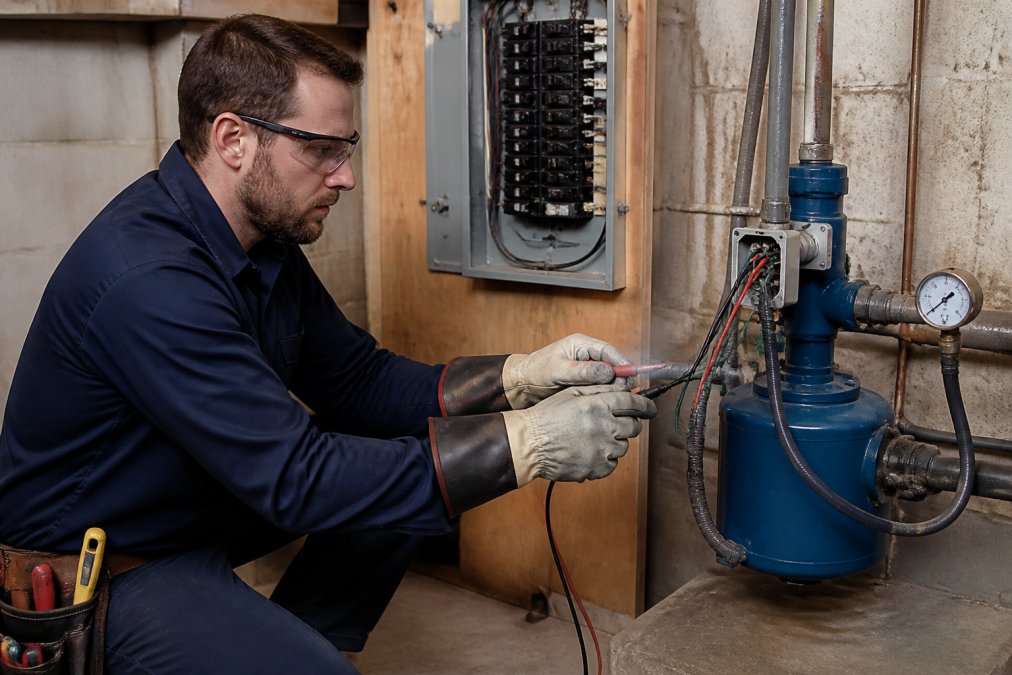
- Electrical testing. Do not use a multimeter on pump wiring or motor terminals. Well pump motors operate on 240 volts. Contact with live terminals causes fatal electrical shock. Even with the breaker off, capacitors can hold lethal charge.
- Pressure tank opening. Do not attempt to open, drain, or service the pressure tank yourself. Pressurized tanks can explode if opened incorrectly. The air bladder inside requires specialized equipment to recharge safely.
- Well casing inspection. Do not enter or peer into the well. Gases can accumulate in confined spaces, and structural collapse is a risk.
- Water quality testing for contamination. Visual inspection cannot detect bacteria, nitrates, or chemical contaminants. Improper sampling contaminates results and may spread pathogens. Professional labs follow EPA protocols.
- Pump disassembly. Internal pump components are precision-engineered. Disassembly without proper tools damages seals and bearings beyond repair.
Professional tests require specialized equipment:
- Electrical continuity and voltage testing with an insulated multimeter to identify motor winding failures or broken connections
- Amperage draw measurement to assess whether the motor is working at rated load or straining (indicates internal wear)
- Pressure switch calibration testing to confirm it cycles the pump at correct PSI thresholds
- Well yield testing using flow measurement equipment to determine gallons per minute the well can sustain
- Water quality analysis through certified lab testing for sediment, bacteria, hardness, and contaminants
- Thermal imaging to detect hot spots on the motor indicating electrical problems
- Pressure tank air charge verification using a specialized gauge to measure the bladder pressure
- Well casing integrity assessment using video inspection or acoustic methods to detect cracks or leaks
Well Pump Replacement Cost and Repair vs. Replace Decision
The decision between repair and replacement hinges on three factors: pump age, repair cost relative to replacement, and the likelihood of future failures. A clear framework prevents emotional decisions and protects your investment.
Understand the true cost of repair:
The 50% rule and why it matters:
Replacement cost breakdown:
- Submersible pump (most common): $800-$2,000 for the pump unit
- Jet pump (shallow wells): $600-$1,500 for the pump unit
- Installation labor: $1,000-$2,500 depending on well depth and accessibility
- Pressure tank replacement (if needed): $400-$1,200
- Electrical work and permits: $200-$500
- Total typical replacement: $2,400-$6,200
When repair makes economic sense:
- Pump is under 8 years old and has no prior failure history
- Single component failure (pressure switch, check valve, capacitor, or relay)
- Repair cost is less than 40% of replacement cost
- Water quality is good (low sediment, neutral pH)
- Well yield is stable and adequate
- Pump has been reliable with consistent maintenance
When replacement is the right choice:
- Pump is 12 years or older (approaching or past typical lifespan)
- Multiple problems appearing simultaneously (e.g., weak pressure AND strange noises AND high electric bills)
- Repair cost exceeds 50% of replacement cost
- Pump has failed more than once in the past 3 years
- Water quality issues require a different pump type (e.g., upgrading to a higher-capacity pump for sediment filtration)
- Well yield has declined significantly, requiring a more powerful pump
- Electrical issues with the motor (burned windings, capacitor failure) typically cost to repair and indicate the motor is near end of life
The hidden cost of repeated repairs:
Get multiple quotes before deciding:
Document your decision:
Preventative Maintenance Checklist
Regular maintenance extends pump life and prevents failures. These steps keep your well system running smoothly:
- Test water pressure monthly (should read 40-60 PSI)
- Listen for unusual pump sounds weekly
- Inspect visible pump and tank for leaks monthly
- Check circuit breaker monthly to ensure it’s on
- Have water tested annually for sediment and quality
- Inspect well head and casing for damage twice yearly
- Clean or replace well screen if accessible
- Flush the pressure tank annually to remove sediment
- Have pressure switch tested every 2 years
- Professional inspection every 3 years minimum
- Check pump amperage draw annually
- Verify check valve operation annually
When to Call a Professional
Contact a licensed plumber immediately if you notice:
- No water from any faucet
- Water that won’t clear after running for 5 minutes
- Pump running constantly without building pressure
- Loud grinding or squealing from the pump
- Water spraying from tank seams or connections
- Sudden spike in electric bills
- Multiple faucets sputtering air simultaneously
Don’t wait for problems to worsen. Early intervention prevents complete system failure and protects your water supply.
Frequently Asked Questions
How many years does a well pump usually last?
Most submersible well pumps last 8 to 15 years, depending on water quality, usage patterns, and maintenance. Shallow-well jet pumps may last 10 to 20 years. Regular maintenance, such as checking the pressure tank and monitoring water quality, can extend the average lifespan of a well pump. If your pump is approaching 12 years old and showing signs of failure, replacement planning is wise.
What is the typical cost of replacing a well pump?
Well pump replacement cost varies based on pump type, depth, and local labor rates. Factors include whether you need a submersible or jet pump, replacement of the pressure tank, and any well casing repairs. For an accurate quote tailored to your specific situation, contact a certified pump installer. Barber Plumbing & Heating can assess your system and provide transparent pricing for your well pump replacement.
Can a bad pressure tank mimic well pump failure?
Yes. A waterlogged pressure tank or failing air bladder can cause fluctuating pressure, short cycling, and the pump running constantly, symptoms that resemble well pump failure. Signs of a bad pressure tank include inconsistent water pressure, the pump cycling on and off rapidly, or no pressure buildup. Testing the tank’s air charge and checking for leaks helps distinguish tank issues from actual pump failure.
How do I test my well water pump without removing it?
Start by checking water pressure using a pressure gauge on an outdoor faucet (normal range is 40-60 psi). Listen for unusual noises and observe water clarity. Test electrical continuity with a multimeter at the circuit breaker. Check the pressure switch for proper operation. If the pump runs constantly or fails to build pressure, the issue likely involves the pump itself or pressure tank. Professional voltage testing and amperage draw measurement provide definitive results.
A failing well pump disrupts your daily life and threatens your home’s water supply. Recognizing warning signs early gives you time to plan repairs instead of facing an emergency. If you notice any symptoms described here, contact Barber Plumbing & Heating for professional diagnosis and repair. Our certified technicians provide honest assessments and reliable solutions to restore your water system and give you peace of mind with our 24/7 emergency support.