

Last Updated: November 4, 2026
Quick Summary
In a well pump emergency, shut off power to the pump at the breaker first, then note the symptoms, check the pressure gauge, and look for leaks. Call for service if anything looks burned or wet, and never keep resetting a tripping breaker.
- A sudden pressure drop points to a mechanical or electrical failure, while a slow decline usually means wear and tear.
- Reset a tripped breaker only once; if it trips again, stop and call for service.
- A waterlogged pressure tank reads full of water and causes short cycling.
- Do a pressure switch reset only when the breaker holds and there is no burning smell or standing water.
- Call for emergency service for burning smells, pooling water near electrical parts, or repeated breaker trips.
Table of Contents
- Signs You Have a Well Pump Emergency
- What to Do First When the Water Stops
- Well Pump Troubleshooting: Breaker, Switch, and Tank Checks
- How to Do a Well Pump Pressure Switch Reset
- Well Pump Running but No Water: What It Means
- Managing a Well Pump Power Outage
- When to Call for Emergency Well Pump Service
- Schedule Your Emergency Well Pump Diagnosis
- Frequently Asked Questions
Signs You Have a Well Pump Emergency
A well pump emergency is any sudden loss of water or sharp pressure drop that leaves your home without a usable supply. The key word is sudden. Slow declines are usually wear and tear. A hard stop almost always means a specific part failed.
Homeowners who act fast often protect their pump. Those who keep flipping breakers risk paying for a new one.
Watch for these warning signs:
- No water at all from every faucet
- Sudden pressure drop mid-shower
- Pump cycling on and off every few seconds
- Burning smell near the tank or control box
- Pooling water around the pressure tank
- Corrosion or visible damage on fittings
Sudden Pressure Drop vs. Slow Decline
Sudden pressure drop points to a mechanical or electrical failure. Think pressure switch, control box, or pump motor. Slow decline points to a failing pump, a clogged filter, or a leak in the piping.
The difference matters because it changes your first move. A sudden stop means shut off power and check the simple things. A slow decline means plan a diagnosis before the pump burns out.
What to Do First When the Water Stops
Stop and protect the system before you touch anything. The first move in any well pump emergency is to shut off power to the pump at the breaker. That single step prevents a dry motor from overheating while you investigate.
Then follow these steps in order:
- Shut off power at the breaker panel
- Note the symptoms (total loss, low pressure, cycling)
- Check the pressure gauge reading
- Look for leaks around pipes and fittings
- Call for service if anything looks burned or wet
The Safety-First Decision Tree
Use this to decide your next move fast:
- Burning smell or scorched wiring? Shut off power and call a pro. Do not reset.
- Breaker tripped once, no other symptoms? Reset it once, then stop.
- Breaker trips again immediately? Stop. Electrical issue or seized pump.
- Water pooling near electrical parts? Stay back and call for service.
- Gauge reads zero with power on? Likely pump or control failure.
That last branch is where most DIY attempts go wrong. Repeated resets can damage the pump system further. DrillerDB’s well pump troubleshooting guidance.
Well Pump Troubleshooting: Breaker, Switch, and Tank Checks
Well pump troubleshooting starts with three checks: the circuit breaker, the pressure switch, and the pressure tank. Do them in that order. Each one rules out a cheaper fix before you assume the pump is dead.
The breaker. Find the pump circuit and look for a tripped breaker. Reset it once. If it holds, you may have had a temporary overload. If it trips again, stop and call for service.
The pressure switch. This small box near the tank tells the pump when to run. Look for burned contacts, loose wires, or corrosion. Do not poke at live wires.
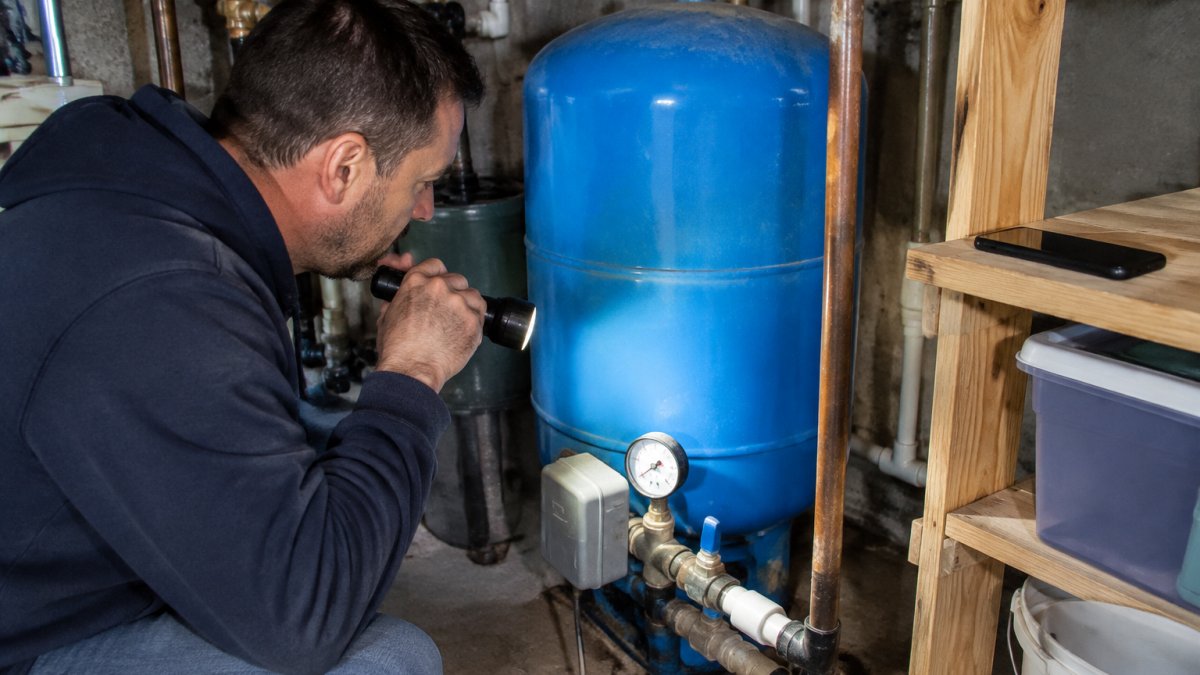
The pressure tank and gauge. Tap the tank. A hollow sound up top is normal. A waterlogged tank reads full of water and causes short cycling.
If your own checks don’t solve it, request professional plumbing repairs rather than keep resetting the breaker.
Symptom-to-Cause Chart
| Symptom | Likely Cause | First Move |
|---|---|---|
| No water, breaker tripped | Overload or short | Reset once, then stop |
| No water, breaker holds | Pressure switch or pump | Check gauge, call pro |
| Pump runs, no water | Lost prime or low water table | Check water level, call pro |
| Pump cycles rapidly | Waterlogged pressure tank | Check tank air charge |
| Burning smell | Motor or wiring failure | Shut off power, call pro |
| Pooling water at tank | Leak or failed fitting | Shut off power, call pro |
How to Do a Well Pump Pressure Switch Reset
A well pump pressure switch reset is safe only when the breaker holds and there is no burning smell or standing water. If any of those are present, skip the reset and call for service.
Here is the safe sequence:
- Turn off power at the breaker.
- Remove the switch cover carefully.
- Look for burned contacts or loose wires. If you see damage, stop.
- Find the reset lever on the switch, if your model has one.
- Press and release it once.
- Restore power and watch the gauge.
- Listen for the pump to kick on within a minute.
If nothing happens, or the switch trips again, the problem is upstream. A licensed technician can test the control box and motor safely.
Well Pump Running but No Water: What It Means
A well pump running but no water usually means one of three things: the pump lost prime, the water level dropped below the intake, or the pump is spinning without moving water. In each case, the motor is working but the water flow has stopped.
Drought makes this worse. The Virginia Department of Health’s guidance on private wells notes that severe drought conditions can lower water tables enough to affect private well supply.
Common causes include:
- Lost prime after a power outage or repair
- Low water table from dry conditions
- Failed check valve letting water drain back
- Clogged intake or screen
- Worn impeller inside the pump
Do not run a dry pump for long. It overheats and can seize. If you have follow-up questions about your well water, our FAQ page covers common issues and next steps.
Managing a Well Pump Power Outage
A well pump power outage is a water outage, so plan for both. When the grid goes down, the pump stops and pressure drains from the tank. Most pressure tanks hold only a small reserve, enough for a few flushes and a quick hand wash.
Do this during an outage:
- Fill containers early while pressure remains. Fill clean pitchers, pots, and food-grade containers from the highest-pressure tap first.
- Turn off the pump breaker to avoid a surge when power returns.
- Limit flushes to stretch the tank reserve. A bucket of stored water poured directly into the bowl can replace a flush.
- Keep fridge and freezer closed to protect food. Keeping the freezer door shut helps it hold its temperature during an outage.
- Use bottled or stored water for drinking, cooking, brushing teeth, and washing hands.
Temporary Water and Sanitation Plan
Treat the outage as a short camping trip at home. Set aside drinking water first, then sanitation water. Handwashing matters most: use a no-rinse hand sanitizer when water is scarce, and reserve stored water for rinsing after soap. For toilets, line the bowl with a plastic bag and seal waste in a tied bag for disposal if flushing is not possible.
When Power Returns
When power returns, check the gauge before using water. If pressure does not build within a few minutes, the pump may need a reset or service. Open a cold tap to clear air and sediment before running appliances. If the pump short-cycles or the breaker trips, shut off power and call for service.
When to Call for Emergency Well Pump Service
Call for emergency well pump service when you see a burning smell, standing water near electrical parts, a breaker that trips twice, or no water after one safe reset. Those signs point to failures that need a licensed technician. A common pattern is that homeowners who keep resetting a tripping breaker turn a switch or wiring repair into a pump replacement.
Use this urgency triage:
- Call now (emergency): burning smell, scorched wiring, water pooling near electrical parts, repeated breaker trips, pump running dry, or no water after one reset.
- Call same day (prompt): low pressure, rapid cycling, discolored water, or a pump that runs but does not build pressure.
- Schedule soon (non-emergency): slow pressure decline, intermittent water, or a gauge that reads normal but pressure feels weak.
What to Expect from Emergency Service
When you call, have these details ready: the symptoms and when they started, the pressure gauge reading, whether the breaker tripped and how many times you reset it, the pump type and approximate age if known, and whether you see leaks or hear unusual noises. Clear the access path to the pressure tank, switch, and control box, and keep pets and children away from the area. A technician can check the pressure switch and gauge, the control box and motor, the wiring, the tank air charge, and the water level and pump performance.
Repair Urgency and Cost Expectations
The final price depends on the failure type, parts availability, pump depth and horsepower, and whether the pump must be pulled. A pressure switch or control-box repair is often less costly than a full pump replacement, which is why stopping repeated resets matters. Ask for a diagnosis and a written estimate before work begins.
Call us right away if you notice:
- Scorched wiring or a hot control box
- Repeated breaker trips
- Water pooling near the tank or switch
- No water after a single reset
- Pump running dry for more than a minute
A quick diagnosis protects the pump, the wiring, and your home. Well pump installation and repair service is available when you’re ready to book. Waiting usually costs more.
Schedule Your Emergency Well Pump Diagnosis
You do not have to guess your way through a well pump emergency at 2 a.m. Shut off the power, note the symptoms, and let a pro take it from there.
Barber Plumbing & Heating offers 24/7 emergency service. We have served Chester and Lancaster Counties for over 20 years as a third-generation family business.
Ready to get your water back? Schedule 24/7 emergency plumbing service or contact our team for a quote today.
Frequently Asked Questions
How can I run my well pump during a power outage?
A well pump needs electricity, so the practical options are a generator or a battery backup sized for the pump’s load. Never plug a pump into an undersized generator or backfeed a home circuit; have a qualified electrician install a proper transfer switch. If you have no backup, shut off the pump breaker to prevent a surprise restart when power returns, and plan temporary water from stored supplies until service is restored.
Is it safe to reset a well pump pressure switch?
Only if the power is off and you see no burning smell, scorch marks, or pooling water near electrical parts. Turn off the breaker first, then remove the switch cover and check for corroded or welded contacts. If the contacts are clean, a single reset may restore water. Repeated resets after a trip can damage the pump, so call a professional if the breaker trips again.
Why is my well pump running but no water is coming out?
A running pump with no water usually points to a lost prime, a failed check valve, a broken pipe or fitting, or a pump that is spinning without moving water. Check the pressure gauge first; if it reads zero while the pump runs, shut off power and inspect for leaks. Because the cause can be mechanical or electrical, a professional diagnosis prevents further damage.
When should I call an emergency well pump repair service?
Call immediately if you smell burning, see scorched wiring, have standing water near electrical components, or the breaker trips more than once. Also call if you have no water after basic checks, if the pump runs continuously, or if your household includes young children, elderly residents, or medical needs. A certified technician can restore water and confirm the system is safe.