

Replacing a water heater is not a simple choice between a large tank and a compact box on the wall. For Chester County homes with private wells, the right system also depends on water hardness, sediment, well flow, pressure, fuel availability, venting, electrical capacity, and how many people need hot water at the same time.
A tank water heater stores a ready supply of hot water. A tankless unit heats water as it moves through the appliance. Both can be reliable, but each solves a different set of problems. Barber Plumbing & Heating installs, repairs, and maintains multiple water heater types and can help homeowners compare options through its water heater installation and repair service in Honey Brook and surrounding Chester County communities.
How Tank and Tankless Water Heaters Differ
Conventional storage models keep a reservoir of water hot and ready for use. The U.S. Department of Energy explains that residential storage tanks commonly hold 20 to 80 gallons. Their main tradeoff is standby heat loss, because the appliance reheats water as the tank cools. Proper sizing is based on the home’s peak-hour demand and the unit’s first-hour rating, not tank capacity alone. See the DOE overview of storage water heaters.
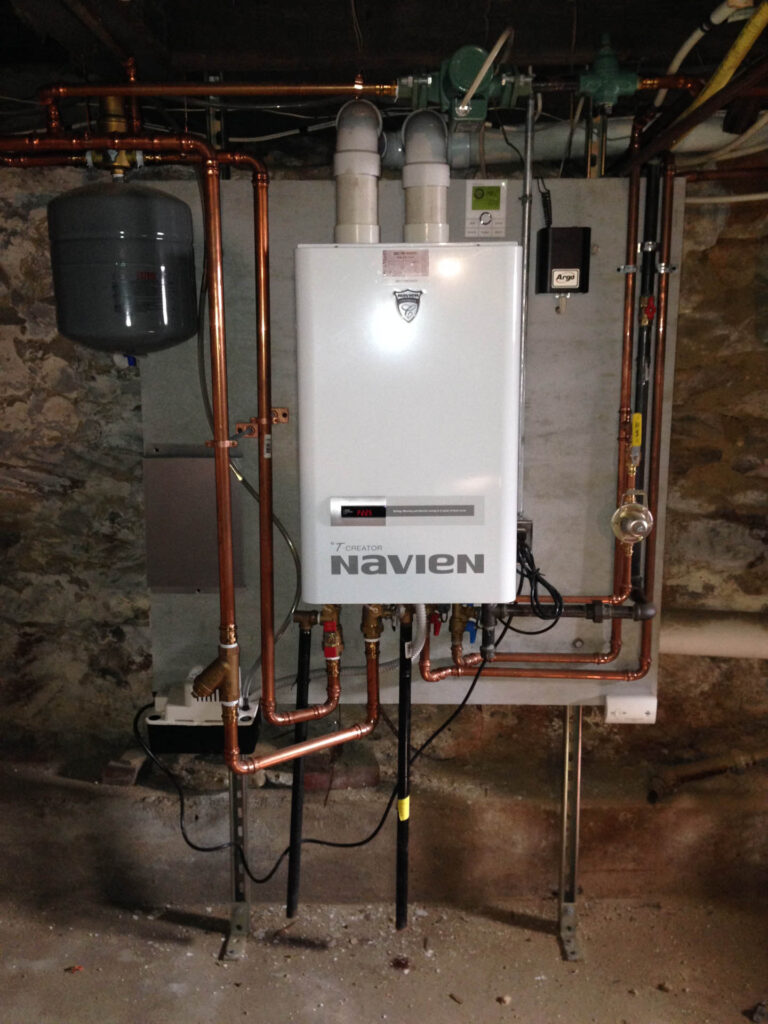
Tankless models do not maintain a stored reservoir. A flow sensor activates the burner or heating elements when a hot-water tap opens. ENERGY STAR notes that whole-home gas tankless units avoid standby losses and use a heat exchanger to warm incoming water. They can provide continuous hot water when properly sized, but every model has a maximum flow rate and temperature-rise capacity. Learn more about how whole-home gas tankless water heaters work.
| Decision Factor | Tank | Tankless |
|---|---|---|
| Hot-water delivery | Stored supply with a defined recovery rate | Continuous delivery within the unit’s flow limit |
| Upfront work | Often simpler when replacing a similar unit | May require gas, venting, condensate, or electrical upgrades |
| Space | Requires floor space and service clearance | Wall-mounted and compact |
| Well-water sensitivity | Scale and sediment collect in the tank | Small heat-exchanger passages require consistent maintenance |
| Best fit | Predictable demand, easier retrofit, multiple fuel choices | Space savings, long draws, suitable fuel and infrastructure |
Five Questions That Matter for a Chester County Well-Water Home
1. What is in the water?
Groundwater can carry hardness minerals, iron, manganese, sediment, or other dissolved material. Hardness is not generally a health concern, but the National Ground Water Association notes that mineral deposits can form on pipes and plumbing fixtures. Read its overview of groundwater quality and hard water.
Both water heater types can lose efficiency when scale builds up. A tank may collect sediment at the bottom, which can contribute to noise and reduce heat transfer. A tankless heat exchanger has narrower water passages, so manufacturer-recommended flushing and water-quality management are especially important. Before choosing equipment, consider testing the water and reviewing whether the home needs water conditioning or filtration.
2. Can the well and pump support peak demand?
A tankless unit can heat water continuously, but it cannot create more flow than the well system supplies. If the shower pressure drops when a washing machine or another fixture runs, the well pump, pressure tank, treatment system, or plumbing may need attention first. A larger tankless heater will not correct low source flow or unstable pressure.
A storage tank provides a temporary hot-water reserve, which can soften short demand spikes. It does not solve a low-yield well, but it may feel more forgiving in a home where several fixtures are used close together. Barber can inspect the water-heating equipment alongside the home’s well pump and pressure system.
3. How much hot water does the household use at once?
Count simultaneous uses, not just the number of occupants. A large soaking tub, two showers, a dishwasher, and a washing machine can create a very different peak than one shower at a time. For a tank, compare first-hour rating with expected demand. For tankless, calculate the combined flow rate and the temperature rise needed during winter, when incoming well water is colder.
4. What fuel and installation infrastructure are available?
A like-for-like tank replacement is often the most straightforward project, although code, venting, shutoff, drain-pan, and expansion requirements still need review. A gas tankless conversion may require a larger gas line, new sealed venting, a condensate drain, and a suitable mounting location. A whole-home electric tankless unit may require substantial electrical capacity. These upgrades can change the economics even when the appliance itself is efficient.
5. How will the system be maintained?
No water heater is maintenance-free. Storage models may need periodic inspection, sediment flushing, anode-rod evaluation, and relief-valve checks. Tankless units may need descaling, filter cleaning, combustion service, and condensate-system maintenance. The schedule should follow the manufacturer’s instructions and reflect actual water quality.
Comparing replacement options? Call Barber Plumbing & Heating at 610-273-2369 for a water heater consultation based on your home, well system, and fuel setup.
When a Tank or Traditional Water Heater May Be the Better Fit
- The home needs a straightforward replacement with minimal infrastructure changes.
- Several fixtures may draw hot water at once, and a properly sized stored reserve is useful.
- The available gas, venting, or electrical service makes a tankless conversion expensive.
- The homeowner prefers familiar maintenance and a lower initial project cost.
- The home uses a boiler and may benefit from an indirect storage water heater after professional evaluation.
When a Tankless Water Heater May Be the Better Fit
- The household wants long hot-water draws without waiting for a storage tank to recover.
- Floor space is limited and a wall-mounted installation is practical.
- The home has suitable gas capacity, venting options, drainage, and combustion-air conditions.
- Peak flow can be met after accounting for winter groundwater temperature.
- The owner is prepared to follow a maintenance plan suited to the home’s water quality.
Do Not Overlook Hybrid and Indirect Options
Tank and tankless are not the only choices. A heat pump water heater stores water but uses heat from the surrounding air, which can make it an efficient electric option when the room has adequate volume, temperature, drainage, and clearance. Homes with boilers may also be candidates for indirect water heaters. The best comparison should include the equipment already in the home, local fuel costs, available space, noise tolerance, and installation requirements.
Get a Water Heater Recommendation for Your Chester County Home
The best water heater is the one that matches the home’s actual demand and infrastructure. For a private-well property, that means looking at the water itself, the well’s flow and pressure, the family’s peak usage, and the condition of the plumbing before selecting a model.
Barber Plumbing & Heating serves Honey Brook, Coatesville, Downingtown, Glenmoore, Parkesburg, Atglen, Morgantown, and nearby communities. The team can compare tank, tankless, hybrid, and other appropriate options, then complete the installation and related plumbing work. Call 610-273-2369 to request a water heater repair or replacement estimate.
Frequently Asked Questions
Can a tankless water heater work with a private well?
Yes, provided the well system delivers adequate and stable flow and pressure. The unit must also be sized for simultaneous demand and winter inlet-water temperature. Water quality and maintenance requirements should be reviewed before installation.
Is tankless better when a home has hard water?
Not automatically. Hard water can create scale in both tank and tankless systems. Tankless heat exchangers often require regular descaling, while storage tanks can accumulate sediment. Testing and treating the water may be part of protecting either investment.
Will a tankless unit fix low water pressure?
No. A water heater does not correct a weak well pump, failing pressure tank, clogged filter, low-yield well, or restricted plumbing. Those issues should be diagnosed before sizing a replacement water heater.
Which option is better for a large family?
Either can work when sized correctly. A storage unit needs enough first-hour capacity and recovery. A tankless unit needs enough flow capacity for the number of fixtures used at once. Household routines often matter more than head count alone.
How long does hot water stay available with tankless equipment?
A properly sized unit can continue heating as long as water and fuel are supplied, but it still has a maximum flow rate. If simultaneous demand exceeds that rating, outlet temperature or flow may fall.